How to Make Crispy Dosa from Ready-Made Batter
Most soggy dosas come down to three fixable things: a tawa that is not hot enough, batter that is too thick, and spreading too slowly. Here is how to fix all three.
Start with batter at room temperature
Cold batter straight from the fridge is the most common reason a dosa turns pale and soft. The batter stiffens when chilled, so it will not spread thin, and it cools the tawa the moment it touches down.
Take the batter out 30 to 40 minutes before you cook. In Telangana summers, 20 minutes is plenty. Stir it gently once — do not beat it, or you knock out the air that natural fermentation built.
Get the consistency right
Dosa batter should pour in a smooth, unbroken ribbon and settle flat within a couple of seconds. If it sits in a mound, it is too thick and your dosa will be bready. If it runs like water, it will tear as you spread.
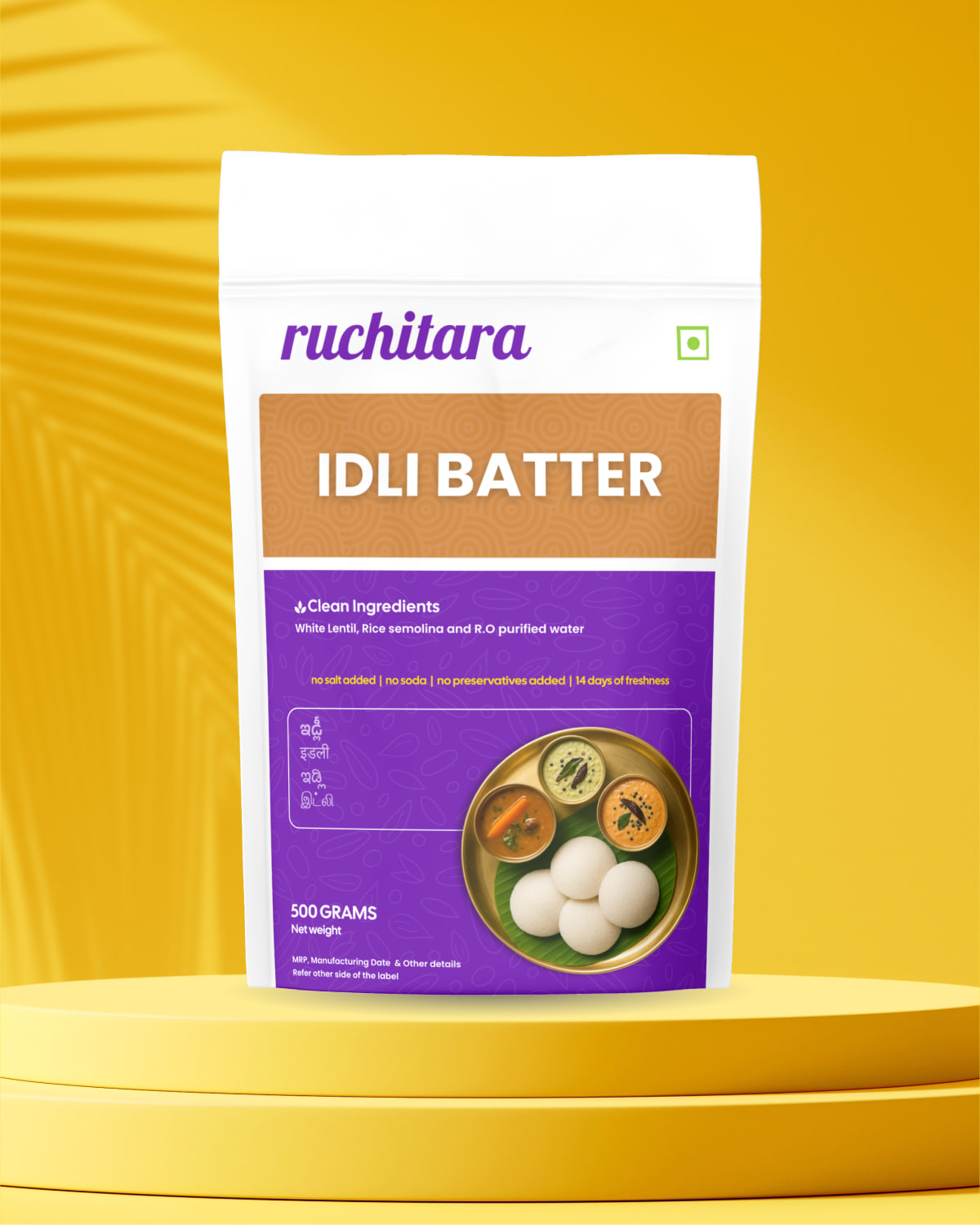
Add water a tablespoon at a time until it flows freely. Idly batter is deliberately thicker than dosa batter — if you are using the same pack for both, thin down only the portion you are about to pour.
Heat the tawa properly, then cool it slightly
This is the step almost everyone skips. Heat the tawa on medium-high until a few drops of water flicked onto it dance and evaporate within two seconds. That is your target temperature.
Now bring it down: sprinkle a little water, wipe with a halved onion or a damp cloth, and let the hiss settle. A tawa that is too hot sets the batter before you can spread it, which gives you a thick, uneven dosa.
Pour and spread in one continuous motion
Pour a ladleful at the centre, then spread outward in a single unbroken spiral. Work quickly — you have about three seconds before the batter starts to set. Stopping and restarting is what creates those thick ridges.
Do not press down. Let the back of the ladle glide, using its weight rather than your arm.
Oil at the edges, not the middle
Drizzle half a teaspoon of oil or ghee around the rim and a few drops on top. The edges are where crispness begins, and oil there helps the dosa lift cleanly.
Cook on medium-high until the surface loses its wet sheen and the edges curl up and turn golden. Do not flip a plain dosa — one side is all it needs. Serve immediately; crispness starts fading within a minute of leaving the pan.
Quick troubleshooting
Frequently asked
Can I make crispy dosa without fermenting the batter myself?
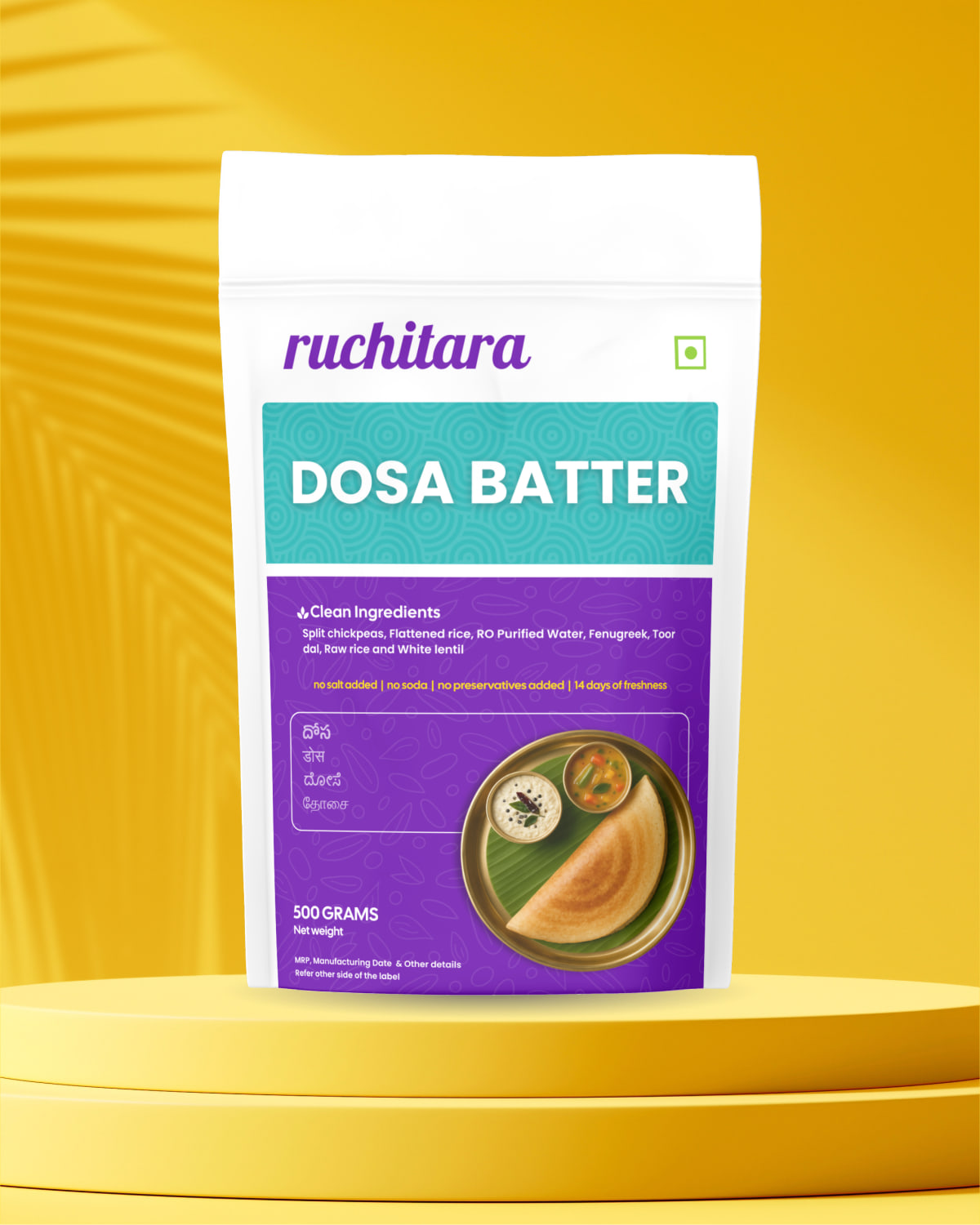
Yes. Ready-made batter like Ruchitara arrives already naturally fermented, so you skip soaking, grinding and the overnight wait. Bring it to room temperature, thin it slightly and cook on a properly heated tawa.
Why is my dosa not crispy even with good batter?
Almost always tawa temperature. Heat the pan until water droplets skitter and vanish in about two seconds, then wipe it down before pouring. Cold batter and over-thick batter are the next two culprits.
How long does ready-made dosa batter last?
Ruchitara batter is best used within 3 days of delivery, kept refrigerated. It contains no preservatives, so it will keep fermenting slowly and turn sour beyond that.