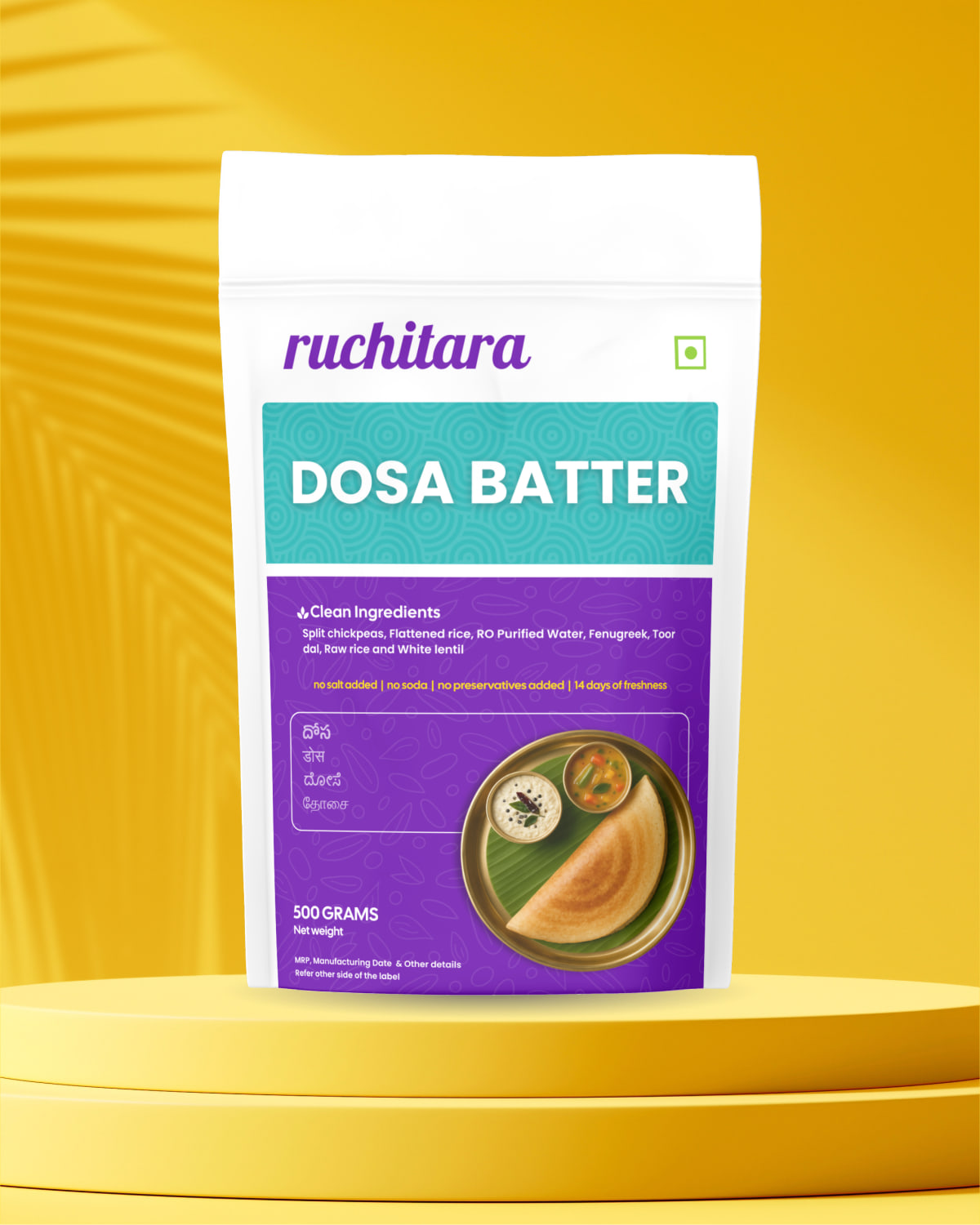
How to Store Dosa Batter So It Stays Fresh
Batter is alive. Storage is really about slowing fermentation down to the pace you want — here is how, plus what to do when it goes too far.
Refrigerate straight away
Naturally fermented batter keeps working at room temperature. In Telangana warmth it can go from perfectly tangy to unpleasantly sour in half a day. Put it in the fridge as soon as it arrives, ideally around 4°C.
Cold does not stop fermentation, it slows it to a crawl. That is exactly what you want between deliveries.
Leave room in the container
Fermenting batter releases carbon dioxide and rises. Fill a container no more than three-quarters full, or you will find batter creeping out under the lid.
A loose lid is better than an airtight seal — the gas needs somewhere to go.
Take out only what you need
Repeatedly warming and re-chilling the whole batch accelerates souring and invites contamination. Ladle out the portion you are cooking, let that come to room temperature, and put the rest straight back.
Always use a clean, dry spoon. Water is what turns batter bad early.
How long it actually keeps
Do not throw away sour batter
Over-fermented batter is not spoiled, just tangier. That extra acidity is an asset in the right dish.
Make uthappam, where onion, tomato and chilli balance the sourness. Or add a spoon of rava and a little water and make quick paniyaram. Sour batter also makes excellent savoury pancakes with grated carrot and coriander stirred through.
Genuine spoilage looks different: pink or grey discolouration, visible mould, or a smell that is sharp and off rather than pleasantly sour. That batter goes in the bin.
Frequently asked
How long does dosa batter last in the fridge?
Around 3 days at its best for preservative-free batter kept at about 4°C. It stays usable a little longer but turns increasingly sour.
Can you freeze dosa batter?
Yes, for up to a month, though the texture is not quite the same afterwards. Freeze in portions and thaw overnight in the fridge rather than at room temperature.
Why does my dosa batter smell sour?
Fermentation has simply gone further than you wanted, usually from being left out too long. It is safe to eat — use it for uthappam. Discard it only if you see discolouration or mould.